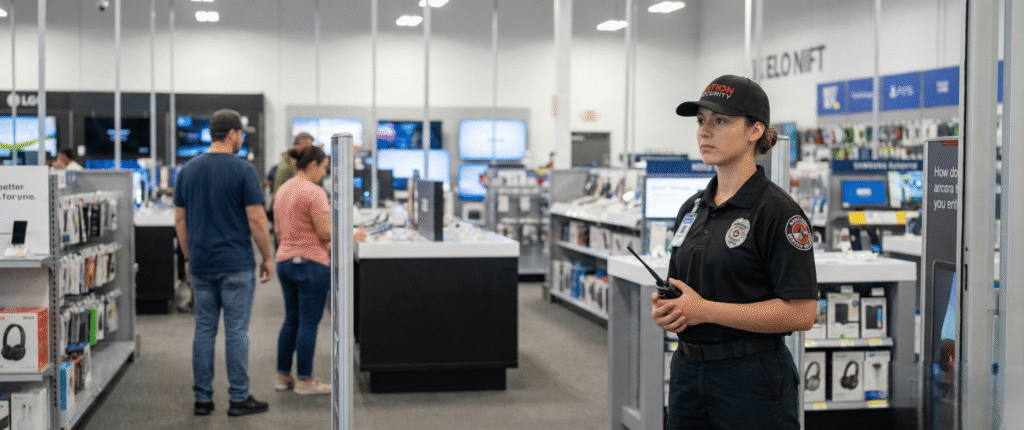
Understanding Florida Security Guard Licensing
Florida requires all security guards to be licensed through the Florida Department of Agriculture and Consumer Services (FDACS), Division of Licensing. Whether you are an individual pursuing a career in the security industry or a business owner looking to hire security guards, understanding these licensing requirements is essential for legal compliance and professional credibility. Operating as an unlicensed security guard in Florida is a criminal offense, and businesses that knowingly hire unlicensed guards face both criminal penalties and civil liability exposure.
There are two primary license types for security guards in Florida: the Class D license for unarmed security officers and the Class G license for armed security officers. This comprehensive guide covers everything you need to know about obtaining, maintaining, renewing, and verifying both licenses, along with information about the Class B agency license required for security companies.
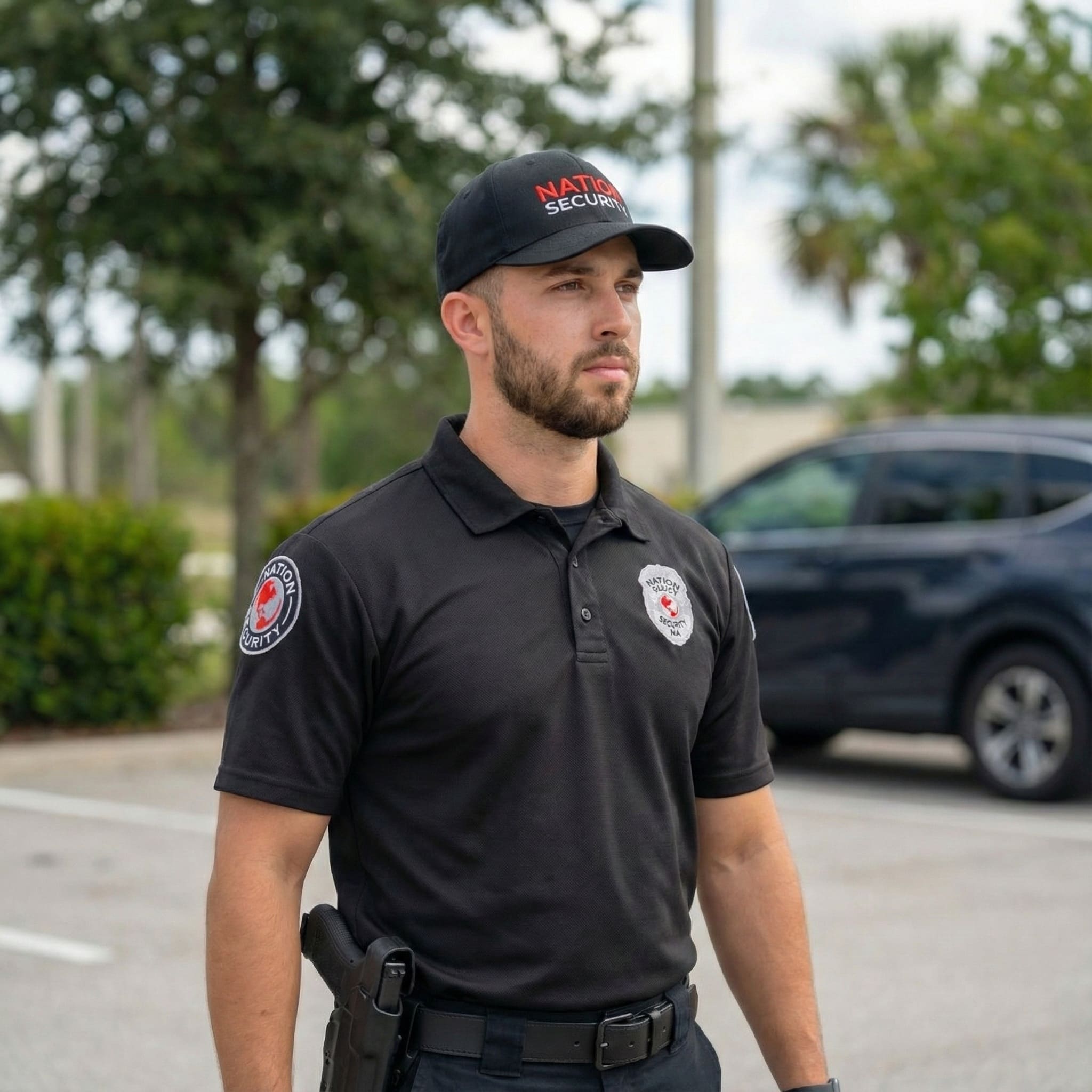
Class D License: Unarmed Security Officer
The Class D Security Officer License is the foundational license required for anyone working as an unarmed security guard in Florida. This license authorizes individuals to perform security duties without carrying a firearm, including access control, patrols, surveillance monitoring, incident reporting, and all other standard security functions.
Class D Requirements
To qualify for a Class D license in Florida, applicants must meet several requirements. You must be at least 18 years old at the time of application. You must be a U.S. citizen or legal resident alien with valid work authorization. You must pass a fingerprint-based background check conducted through both the Florida Department of Law Enforcement (FDLE) and the FBI. Certain felony and misdemeanor convictions may disqualify an applicant, though some disqualifying offenses may be eligible for an exemption review. You must also complete 40 hours of professional training at a FDACS-approved training school.
The 40-hour Class D training curriculum is comprehensive and covers the legal authority and limitations of security officers in Florida, emergency procedures and crisis management, observation techniques and incident documentation, patrol tactics and route planning, access control procedures and visitor management, professional report writing standards, terrorism awareness and prevention, basic first aid and CPR, professional ethics and conduct standards, and protocols for interacting with law enforcement.
Class D Application Process: Step by Step
The application process for a Florida Class D license involves five key steps. First, complete the 40-hour training course at an approved training facility. Upon successful completion, you receive a certificate of completion and a Training Verification form that you will submit with your application. Second, submit your fingerprints for the background check. This is done electronically through an approved LiveScan vendor, and the cost is approximately $42 for the fingerprinting service. Third, complete the Class D application form (FDACS Form 16002) and assemble your supporting documentation including the training certificate, proof of identity, and proof of legal work status. Fourth, submit your completed application along with the $45 application fee to FDACS. Payment can be made by check, money order, or through the online application portal. Fifth, wait for processing. If all documentation is complete and the background check clears without issues, typical processing time is two to four weeks. You will receive your license by mail once approved.
Class G License: Armed Security Officer
The Class G Statewide Firearm License authorizes a security officer to carry a firearm while performing security duties. This license is always held in addition to a Class D license — you cannot obtain a Class G without first having a valid, active Class D license. The Class G license enables officers to work in higher-risk environments that require armed security capabilities.
Class G Requirements
Class G applicants must hold an active Class D Security Officer License in good standing. The minimum age for a Class G license is 21 years old, three years higher than the Class D requirement. Applicants must complete 28 hours of firearms training at a FDACS-approved firearms training school. This training covers Florida firearms laws and the legal parameters for use of force, safe handling, storage, and transportation of firearms, live-fire range qualification with the specific firearm type the officer will carry on duty, shoot and do-not-shoot scenario-based decision training, and firearms maintenance and care procedures. Applicants must pass a live-fire range qualification demonstrating proficiency with their duty weapon, scoring at least 80 percent on a standardized course of fire.
Class G Application Process
The Class G application process begins with confirming that your Class D license is active and in good standing. Next, complete the 28-hour firearms training course at an approved facility and pass the live-fire range qualification exam. Then submit FDACS Form 16004 (the Class G application) along with your firearms training certificate and range qualification scores. Pay the $45 application fee and wait for FDACS approval, which typically takes two to four weeks.
License Renewal and Continuing Education
Both Class D and Class G licenses are valid for two years from the date of issuance. Allowing your license to expire means you cannot legally work as a security guard until it is renewed or reissued, so staying on top of renewal deadlines is critical for your career and your employer’s compliance.
To renew your Class D license, you must complete a refresher training course and pay the $45 renewal fee. Submit your renewal application at least 60 days before your license expiration date to avoid any gap in licensure that could prevent you from working. If your license expires and you do not renew within a specified grace period, you may be required to complete the full 40-hour training program again.
Class G renewal requires annual firearms re-qualification at an approved range, even though the license itself renews on a two-year cycle. This annual requirement ensures that armed officers maintain consistent firearms proficiency throughout the license period. The renewal fee is $45, and as with the Class D, you should submit your renewal well in advance of the expiration date.
How Employers Can Verify Guard Licenses
If you are a business owner, property manager, or HOA community manager hiring security guards, you have both the right and the responsibility to verify that every guard assigned to your property holds the appropriate, active license. FDACS provides a free online verification system through the Division of Licensing website where you can search by the guard’s name or license number. The system displays the license type (Class D, Class G, or both), the current status (active, expired, suspended, or revoked), and the expiration date.
Responsible security companies verify all licenses before employing any officer and maintain current records of all certifications, training completions, and re-qualifications. When evaluating a security provider, ask about their license verification procedures and request to see documentation confirming that the officers assigned to your property are currently licensed.
Penalties for Unlicensed Security Work in Florida
Working as a security guard without the proper license in Florida is a serious criminal offense. Unlicensed security work is classified as a first-degree misdemeanor punishable by up to one year in jail and a $1,000 fine. For repeat offenses, the penalties escalate. Employers who knowingly hire unlicensed guards face similar criminal penalties plus significant civil liability exposure — if an unlicensed guard causes injury or damage, the employer’s legal and financial exposure is substantially greater than it would be with properly licensed personnel.
Beyond the criminal penalties, unlicensed security work voids any insurance coverage that might otherwise apply, meaning both the guard and the employer are personally exposed for any damages or injuries that occur. This is one of the primary reasons why verifying guard licenses is not just a best practice but a critical risk management requirement.
Security Agency Licensing: The Class B License
Security companies operating in Florida must hold a Class B Security Agency License. This license authorizes a business to employ and deploy security officers and is separate from the individual Class D and Class G licenses held by the officers themselves. Class B requirements include maintaining a minimum of $300,000 in general liability insurance, designating an agency manager who holds a Class D and/or Class G license and meets FDACS experience requirements, and passing an agency-level background check.
When you hire a security company, always verify that their Class B license is active and in good standing through the FDACS database. An unlicensed security agency operating in Florida is breaking the law, and any contracts with such a company are likely unenforceable — leaving you without legal recourse if something goes wrong.
How Long Does It Take to Get a Security Guard License in Florida?
The total timeline from start to finish depends on several factors, but here is a typical estimate. The 40-hour Class D training course can be completed in as little as one week if attending a full-time program, or spread over several weeks for part-time or evening classes. Fingerprinting and background check processing typically takes one to two weeks. FDACS application processing takes an additional two to four weeks after all documents are received. In total, most applicants can expect to receive their Class D license within four to eight weeks of beginning the training program.
For the Class G license, the 28-hour firearms training course adds approximately one additional week. Since you must already hold a Class D license to apply for a Class G, the total timeline from zero to fully armed-and-licensed is typically eight to twelve weeks. These timelines assume a clean background check with no complications — certain criminal history issues, incomplete documentation, or high-volume processing periods at FDACS can extend the timeline.
Frequently Asked Questions About Florida Security Guard Licenses
How much does a Florida security guard license cost?
The total cost to obtain a Florida Class D security guard license includes the training course fee (typically $100 to $300 depending on the school), the fingerprinting fee (approximately $42), and the FDACS application fee ($45). The total out-of-pocket cost ranges from approximately $190 to $390. Adding a Class G license requires an additional firearms training course ($150 to $400) plus the $45 application fee.
Can I get a security guard license with a felony conviction?
Certain felony convictions disqualify applicants from obtaining a Florida security guard license. However, FDACS offers an exemption review process where individuals with disqualifying convictions can petition for an exception based on the nature and age of the offense, evidence of rehabilitation, and other factors. The exemption process is not guaranteed and is evaluated on a case-by-case basis. Consulting with an attorney familiar with FDACS licensing can help you understand your specific eligibility.
How do I renew my Florida security guard license?
Class D and Class G licenses are renewed every two years. Class D renewal requires completing a refresher training course and paying the $45 renewal fee. Class G renewal requires annual range re-qualification and the $45 fee. Submit renewal applications at least 60 days before the expiration date to avoid any gap in licensure. Late renewals may require additional steps or retraining.
What is the difference between a Class D and Class G security license?
The Class D license authorizes unarmed security work and requires 40 hours of training. The Class G license authorizes carrying a firearm on duty and requires an additional 28 hours of firearms training plus range qualification. A Class G is always held in addition to a Class D — you need both to work as an armed security guard in Florida. The minimum age for Class D is 18, while Class G requires you to be at least 21.
Can I verify a security guard’s license online?
Yes. The FDACS Division of Licensing provides a free online license verification tool where you can search by name or license number. The system shows whether the license is active, the license type (D, G, or both), and the expiration date. This tool is available to the public and should be used by anyone hiring security guards or contracting with a security company.
Getting Started with Nation Security
Nation Security employs only fully licensed Class D and Class G security officers. We invest in training programs that exceed state minimums and maintain rigorous compliance standards to ensure every officer assigned to your property meets the highest professional standards. Whether you need licensed unarmed officers for your business, armed security for high-risk environments, or K9 security teams for specialized detection needs, we provide vetted, professional guards across Florida.
As a fully licensed Class B security agency, Nation Security carries comprehensive insurance coverage and maintains complete documentation for every officer in our roster. When you partner with us, you can be confident that your security team is legally compliant, professionally trained, and ready to protect your people and property from day one. Call 800-260-5615 for a free consultation or visit nationsecurity.com to learn more about our services.