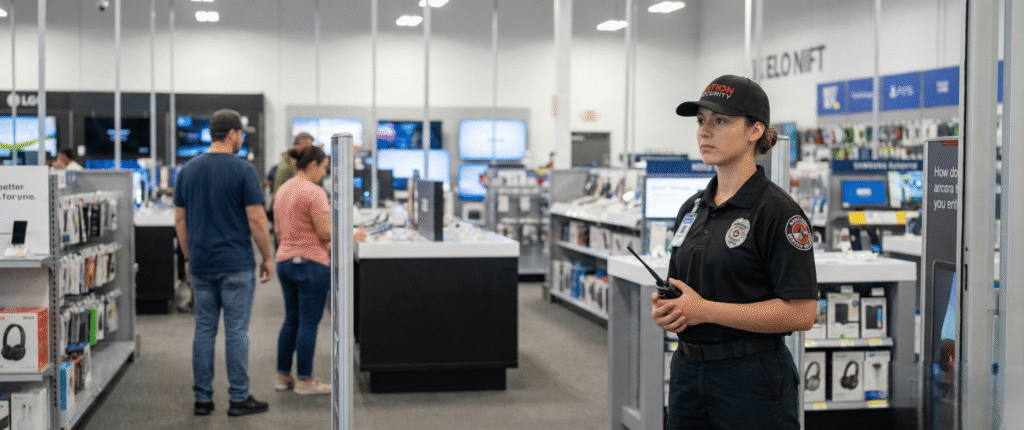
Choose the Right Security for Your Needs
Understanding the Difference Between Armed and Unarmed Security
Choosing between armed and unarmed security guards is one of the most consequential decisions in any security plan. Both types of guards serve important roles, but they differ significantly in training requirements, cost, legal authority, liability exposure, and the environments where they perform best. Making the wrong choice can mean either overpaying for protection you do not need or leaving your property, people, and assets underprotected against real threats.
This comprehensive guide compares armed and unarmed security across every factor that matters — training and licensing, cost, liability, deterrence, customer experience, and ideal use cases — so you can make the right decision for your Florida property, business, or event. Whether you are a business owner evaluating security options for the first time, a property manager comparing providers, or an event organizer building a security plan, this guide will help you match your security investment to your actual risk profile.
What Is an Unarmed Security Guard?
An unarmed security guard is a licensed professional who provides protection services without carrying a firearm. In Florida, unarmed guards hold a Class D Security Officer License, which requires completion of 40 hours of state-approved training covering legal authority, emergency procedures, observation techniques, report writing, and professional conduct. Unarmed guards rely on their training in observation, communication, de-escalation, and documentation to maintain safety and deter criminal activity.
Unarmed guards perform a wide range of security functions including access control and visitor verification, surveillance system monitoring, foot and vehicle patrols, property rule enforcement, emergency response and first-responder coordination, incident documentation and report writing, and serving as a visible deterrent to criminal activity. They are the backbone of most commercial and residential security programs and are appropriate for the majority of security situations.
What Is an Armed Security Guard?
An armed security guard carries a firearm while on duty and holds both a Class D and a Class G Statewide Firearm License in Florida. The Class G license requires an additional 28 hours of firearms-specific training beyond the 40-hour Class D requirement, totaling 68 hours of minimum training. This additional training includes Florida firearms laws and legal use of force, safe handling and storage procedures, live-fire range qualification with a minimum passing score of 80 percent, shoot and do-not-shoot scenario training, and firearms maintenance.
Armed guards can perform all the same duties as unarmed guards, with the critical additional capability of using armed force when legally justified to protect life. They undergo more extensive background checks, must re-qualify at an approved firing range annually, and typically bring more experience in the security industry. Armed officers provide a higher level of deterrence in environments where the threat of violence is credible and immediate.
Key Differences: Armed vs Unarmed Security Guards
Training and Licensing Requirements
Unarmed guards complete 40 hours of Class D training. Armed guards complete those same 40 hours plus an additional 28 hours of firearms-specific instruction, totaling 68 hours minimum. Armed guards must also pass a live-fire range qualification scoring at least 80 percent on a standardized course of fire, and they must re-qualify annually at an approved range to maintain their Class G license. This additional training means armed guards typically have deeper knowledge of threat assessment, use-of-force law, crisis response, and high-pressure decision-making.
Cost Comparison
Unarmed security in Florida typically costs between $25 and $40 per hour. Armed security costs between $35 and $60 per hour. The higher rate for armed guards reflects the additional training investment, firearms liability insurance premiums, annual re-qualification costs, and the specialized skill set these officers bring. While armed security costs more per hour, the investment may be fully justified for high-value or high-risk environments where the consequences of an inadequate security response could be catastrophic. For budget-conscious businesses that do not face elevated threats, unarmed security provides excellent protection at a lower cost.
Liability and Insurance Considerations
Armed security carries significantly higher liability exposure for both the security company and the hiring business. If an armed guard discharges their weapon, the legal, financial, and reputational consequences can be substantial, regardless of whether the use of force was justified. Security companies that provide armed services must carry specialized firearms liability insurance in addition to standard general liability and workers compensation coverage. Businesses that employ armed guards should carefully review the indemnification terms in their service agreement and verify that insurance coverage is adequate.
Unarmed security involves lower liability risk because guards focused on observe-and-report protocols are inherently less likely to create situations that result in lawsuits, criminal charges, or regulatory scrutiny. For businesses that prioritize risk management, unarmed security often represents the optimal balance of protection and liability control.
Deterrence Effectiveness
Armed guards provide a higher visible deterrent, particularly against premeditated crimes like armed robbery, burglary, and organized theft. Criminals conducting surveillance of a potential target are more likely to abandon their plan when they observe armed security on the premises. The psychological impact of a visibly armed officer is substantial and well-documented in security research.
However, unarmed guards still provide significant deterrence. Studies consistently show that the mere presence of any uniformed security personnel — armed or unarmed — reduces crime at a location by 50 to 70 percent. For the vast majority of commercial, residential, and event security applications, this level of deterrence is more than sufficient to meet the security objectives.
Customer and Visitor Experience
This is one of the most important and frequently overlooked factors in the armed-versus-unarmed decision. Unarmed guards create a more welcoming, approachable atmosphere. In environments where customer comfort, resident satisfaction, or visitor experience is a business priority — such as retail stores, hotels, restaurants, residential communities, corporate offices, and healthcare facilities — unarmed guards provide security without creating an intimidating environment. They can serve in a concierge capacity, greeting visitors, managing access, and providing directions, which enhances the overall experience.
Armed guards can create unease among visitors and customers, particularly in family-oriented, hospitality, or healthcare environments. However, in settings where safety concerns are already top of mind — such as banks, government buildings, or high-security facilities — the presence of armed security can actually increase feelings of safety and confidence among occupants.
When to Choose Unarmed Security
Unarmed security is the right choice when the primary security concerns are theft prevention, trespassing deterrence, access control, rule enforcement, and general safety monitoring. The vast majority of commercial and residential security needs fall into this category. Environments well-suited for unarmed guards include residential communities and HOAs, corporate office buildings and business parks, retail stores and shopping centers, hotels and hospitality venues, schools and universities, churches and religious organizations, construction sites, parking garages and surface lots, healthcare facilities and medical offices, and special events with low to moderate risk profiles.
If your primary security objective is to deter opportunistic crime, control access to your property, enforce rules, and have a trained professional on-site to respond to incidents, unarmed security is almost always the most appropriate and cost-effective solution.
When to Choose Armed Security
Armed security is appropriate when there is a credible, documented threat of armed violence, when you are protecting high-value assets that attract sophisticated criminal targeting, or when armed protection is required by regulation or industry standards. Environments that typically benefit from armed guards include banks and financial institutions, jewelry stores and high-end retail, pharmaceutical manufacturing and distribution facilities, cannabis dispensaries and cultivation facilities, cash-in-transit and armored transport operations, government facilities and courthouses, locations with a documented history of armed criminal activity, executive protection and VIP security details, and high-profile events with elevated threat intelligence.
The key question is whether the threat level justifies the additional cost, liability, and customer-experience impact of armed security. If the answer is yes — because the assets being protected are extremely valuable, the threat of violence is real and documented, or regulatory requirements mandate armed protection — then armed security is the right investment.
Can You Combine Armed and Unarmed Security?
Yes, and many of the most effective security programs do exactly this. A hybrid approach that combines both armed and unarmed guards provides layered protection that maximizes both customer comfort and threat response capability. For example, a shopping mall might deploy unarmed guards for customer-facing roles like entrance monitoring, information assistance, and parking lot patrols, while stationing armed officers near high-value jewelry stores or at the centralized security operations center. A large corporate campus might use unarmed guards for lobby reception and building patrols, with armed officers covering the data center and executive suites.
This layered approach allows you to match the security level to the specific risk in each area of your property, rather than applying a one-size-fits-all approach that either overspends on low-risk areas or underspends on high-risk zones.
How Florida Law Governs Armed and Unarmed Security
Florida has clear regulatory frameworks for both armed and unarmed security officers, all administered by the Florida Department of Agriculture and Consumer Services, Division of Licensing. The Class D license authorizes unarmed security work, while the Class G license authorizes the carrying of a firearm on duty. Both licenses require background checks, fingerprinting, and completion of approved training programs. The security company employing the guards must hold a Class B Security Agency License to legally operate.
Florida law holds both security companies and their clients to specific standards regarding the use of force by armed guards. Armed officers may only use their firearm when they reasonably believe that doing so is necessary to prevent imminent death or great bodily harm to themselves or another person. The use of deadly force to protect property alone is generally not justified under Florida law. Understanding these legal boundaries is critical for any business that employs armed security, and a reputable security provider will ensure that all armed officers are thoroughly trained on use-of-force law and decision-making.
Frequently Asked Questions
How much do armed security guards cost in Florida?
Armed security guards in Florida typically cost between $35 and $60 per hour, depending on the location, the specific duties required, the hours of coverage, and the security company. The higher rate compared to unarmed guards reflects the additional training, annual firearms re-qualification, and specialized liability insurance that armed security requires.
How much do unarmed security guards cost in Florida?
Unarmed security guards in Florida generally cost between $25 and $40 per hour. Rates vary based on the location, time of day, contract length, and scope of duties. Unarmed security is the most cost-effective option for the majority of commercial, residential, and event security needs.
What license does an armed security guard need in Florida?
Armed security guards in Florida must hold both a Class D Security Officer License (40 hours of training) and a Class G Statewide Firearm License (additional 28 hours of firearms training including live-fire range qualification). The Class G license must be renewed every two years, with annual range re-qualification required to maintain active status. You can verify any guard’s license through the FDACS licensing database.
Is armed security better than unarmed security?
Neither is inherently better — the right choice depends entirely on your specific risk profile, environment, and security objectives. Armed security provides a higher level of deterrence and response capability against violent threats but costs more and carries greater liability. Unarmed security is appropriate for the vast majority of security needs and provides excellent deterrence at a lower cost with a more customer-friendly presence. A professional security assessment can help determine which option, or combination of both, is right for your situation.
Can a business use both armed and unarmed guards?
Yes. Many comprehensive security programs combine armed and unarmed guards to provide layered protection. Unarmed officers handle customer-facing and general deterrence roles, while armed officers cover high-risk areas, high-value assets, or provide response capability for the most serious threats. This hybrid approach is often the most effective and cost-efficient way to address varying risk levels across a large property or organization.
Making Your Decision
The right choice between armed and unarmed security depends on your specific risk profile, the nature of your environment, your budget, and the experience you want to create for visitors, customers, residents, or employees. Rather than guessing, the most reliable approach is to have a professional security assessment conducted by an experienced provider who can evaluate your property’s specific vulnerabilities and match them with the appropriate level of protection.
Nation Security provides both armed and unarmed security services throughout Florida. Our security consultants conduct thorough property assessments, identify real risks, and recommend the right combination of services to meet your security objectives and budget. All of our officers are fully licensed, insured, background-checked, and trained beyond state requirements. Whether you need a single unarmed guard for your office lobby or a full team of armed and unarmed officers for a large-scale operation, we customize our approach to deliver exactly the protection you need.
Contact us at 800-260-5615 or visit nationsecurity.com to request a free security assessment and get a customized recommendation for your property or business.