Plan Your Event Security with Confidence
Planning an event in Florida comes with unique challenges that go far beyond choosing the right venue and catering menu. Whether you are organizing a music festival on Miami Beach, a corporate conference in Orlando, or a community fundraiser in Tampa, having a solid event security plan is essential to protect your guests, staff, and reputation. In this comprehensive guide, we break down everything Florida event organizers need to know about event security planning, from understanding state-specific regulations to determining the right level of protection for your gathering.
Why Event Security Planning Is Critical in Florida
Florida hosts thousands of events every year, ranging from intimate private gatherings to massive public festivals that draw hundreds of thousands of attendees. The state’s warm climate, tourism-driven economy, and diverse population create a vibrant event landscape, but they also introduce risks that organizers must address proactively. Crowd management, severe weather preparedness, and compliance with local ordinances all demand careful planning. A well-structured event security management plan not only keeps attendees safe but also reduces your legal liability, satisfies insurance requirements, and ensures the event runs smoothly from start to finish.
According to Florida Statute 870.02, event organizers can be held responsible for failing to take reasonable steps to prevent foreseeable harm at their events. This makes security planning more than a best practice — it is a legal obligation. Working with a licensed security provider helps demonstrate due diligence and can significantly reduce your exposure to lawsuits and regulatory penalties.
Understanding Florida’s Event Security Requirements
Florida has specific regulations governing the use of security personnel at events. Any company providing security guard services must hold an active Class B Security Agency License issued by the Florida Department of Agriculture and Consumer Services (FDACS). Individual officers need a Class D license for unarmed security and both a Class D and Class G license for armed security. Before hiring any provider, you should verify their licensing through the FDACS Division of Licensing online database.
Beyond state-level requirements, many Florida counties and municipalities have their own event permitting processes that include security stipulations. For example, large outdoor events in Miami-Dade County typically require a detailed security plan as part of the special event permit application. This plan must outline the number of guards, their positioning, communication protocols, and emergency procedures. Cities like Orlando, Jacksonville, and Tampa have similar requirements, though the specific thresholds and documentation standards may vary.
How Much Security Is Needed for an Event
One of the most common questions organizers ask is, how much security is needed for an event? The answer depends on several factors including the type of event, the expected attendance, the venue layout, and the overall risk profile. As a general framework, here are some guidelines that experienced Florida security professionals follow.
For low-risk private events with fewer than 100 guests, such as corporate dinners or private parties, one to two security officers typically provide adequate coverage for access control and general oversight. Medium-risk events with 100 to 500 attendees, including conferences, trade shows, and community festivals, usually require one security officer per 50 to 75 guests plus a dedicated supervisor. High-risk events with over 500 attendees, such as concerts, sporting events, or political rallies, typically need one guard per 25 to 50 guests, along with a full command structure that includes a site supervisor, roving patrol teams, and a dedicated communications officer.
These ratios are starting points. The actual number should be adjusted based on factors like alcohol service (which generally increases the security staffing requirement by 20 to 30 percent), the presence of VIPs or high-profile guests, the venue’s existing security infrastructure, time of day, and historical incident data for similar events. A qualified security provider will conduct a thorough threat assessment and recommend the appropriate staffing level for your specific situation.
Key Components of a Comprehensive Event Security Plan
A strong event security plan is more than just posting guards at the entrance. It should be a detailed, written document that covers every aspect of safety and emergency response. Here are the essential components that every Florida event organizer should include in their security plan.
Threat and Risk Assessment
Before any security measures are deployed, a comprehensive risk assessment should be conducted. This involves evaluating the event type and purpose, the venue layout including entry and exit points, the expected crowd demographics, historical crime data for the area, potential weather-related risks (particularly relevant during Florida’s June through November hurricane season), and any known threats or intelligence relevant to the event. The findings from this assessment drive every subsequent security decision, from staffing levels to equipment needs.
Access Control and Perimeter Security
Controlling who enters and exits the event space is the foundation of event security. Your plan should define the number and location of entry points, the credentialing system for guests, staff, vendors, and VIPs, any screening procedures such as bag checks or metal detection, vehicle access restrictions and parking security, and barriers or fencing to establish a clear perimeter. For Florida outdoor events, access control takes on added importance since open-air venues lack the natural barriers that indoor facilities provide.
Crowd Management Strategy
Effective crowd management prevents dangerous crushes, stampedes, and bottlenecks. Your security team should establish designated flow patterns to guide foot traffic, stage barriers and queuing systems at high-congestion areas, monitoring positions that provide visibility over the entire venue, clear signage directing attendees to exits, restrooms, and first aid stations, and escalation protocols for when crowd density approaches unsafe levels. Florida’s heat and humidity make crowd management especially critical. Dehydration and heat-related illness can escalate quickly in large crowds, so your security plan should incorporate hydration stations and shaded rest areas as part of the overall safety strategy.
Emergency Response and Evacuation Procedures
Every event security plan must include detailed emergency response procedures for a range of scenarios. In Florida, these should cover severe weather including lightning, tropical storms, and hurricanes, active threat situations, medical emergencies, fire or structural hazards, and power outages. Your evacuation plan should identify primary and secondary evacuation routes, rally points where attendees can gather after evacuation, the chain of command for ordering an evacuation, communication methods for alerting attendees (PA system, mobile alerts, signage), and coordination protocols with local law enforcement and emergency medical services. Florida is the lightning capital of the United States, and outdoor events must have a clearly defined lightning policy that specifies when activities will be suspended and where attendees should seek shelter.
Communication Systems
Reliable communication is the backbone of effective event security. Your plan should specify the primary and backup communication systems (two-way radios, cell phones, satellite phones for remote locations), the radio channel assignments for different teams, the reporting structure and check-in schedule, the process for communicating with local authorities, and public address and mass notification capabilities. In large venue environments or events in remote Florida locations, cell service can be unreliable. Always have a hardwired or radio-based backup communication system in place.
Types of Security Personnel for Florida Events
The right mix of security personnel depends on the nature of your event and its risk profile. Here are the main categories of security professionals available for Florida events.
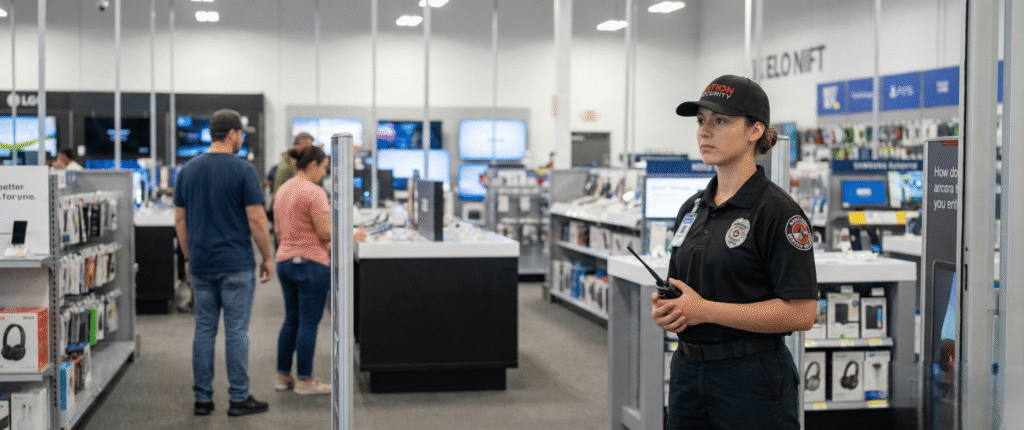
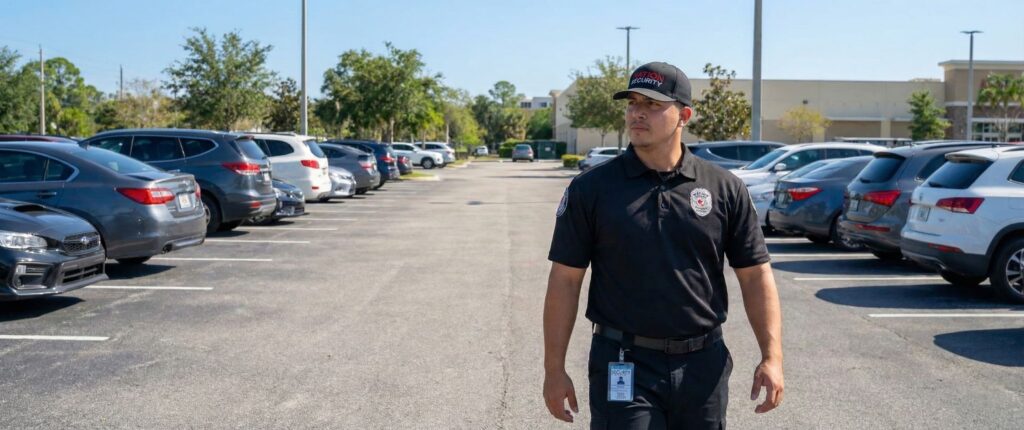
Unarmed Security Guards hold a Florida Class D license and are suited for access control, crowd management, parking lot security, and general deterrence at low to medium-risk events. They are the most cost-effective option and provide a professional but approachable presence.
Armed Security Officers carry Class D and Class G licenses and are appropriate for high-value events, VIP protection, and situations where an elevated threat level has been identified. Armed officers undergo additional firearms training and are experienced in de-escalation and threat response.
K9 Security Teams consist of trained canine units paired with expert handlers. They are highly effective for explosive detection, narcotics screening, and crowd deterrence at large-scale events such as concerts, festivals, and sporting events across Florida.
Off-Duty Police Officers are active law enforcement personnel working in a private capacity. They carry arrest powers and department-issued firearms, making them ideal for events where law enforcement authority may be needed, such as political rallies or events with a history of confrontation.
Mobile Patrol Units use marked vehicles to conduct random inspections and provide rapid response across large venues, multi-location events, or parking areas that are too expansive for foot patrols alone.
Event Security Planning Checklist for Florida Organizers
Use this checklist to make sure you have covered all the essential elements of your event security plan. Start by completing a thorough threat and risk assessment of your venue and event type. Determine the appropriate number and type of security personnel based on attendance, risk level, and alcohol service. Verify that your security provider holds a valid Florida Class B Security Agency License and that all officers are properly licensed. Develop a detailed access control plan that includes credentialing, screening, and perimeter security. Create a crowd management strategy with designated flow patterns and congestion mitigation. Write comprehensive emergency response and evacuation procedures tailored to Florida-specific risks like severe weather and lightning. Establish primary and backup communication systems for the security team. Coordinate with local law enforcement, fire rescue, and emergency medical services. Brief all security personnel, event staff, and volunteers on their roles and responsibilities. Conduct a walkthrough of the venue to confirm all security positions, camera placements, and evacuation routes. Prepare a post-event security debrief process to capture lessons learned.
Common Event Security Mistakes to Avoid
Even experienced organizers sometimes overlook critical security elements. Here are the most common mistakes that can compromise your event’s safety.
Underestimating security staffing needs is the most frequent error. Many organizers try to save money by hiring fewer guards than recommended, only to find themselves unable to manage unexpected situations when they arise. Always budget for at least 10 to 15 percent more security capacity than your baseline estimate suggests.
Failing to verify licensing is a serious oversight. Hiring unlicensed security personnel in Florida is illegal and exposes you to significant liability. Always confirm that your security provider’s Class B agency license and every individual officer’s Class D or Class G license are current and in good standing through the FDACS database.
Neglecting weather contingency planning is particularly dangerous in Florida. The state experiences more lightning strikes than any other in the country, and afternoon thunderstorms are common from May through September. Your security plan must include a specific severe weather protocol with clear triggers for suspending activities and sheltering attendees.
Skipping the pre-event walkthrough means your security team is operating blind. Every security plan should be validated with a physical walkthrough of the venue to confirm that the written plan aligns with the actual layout, identify any last-minute hazards, and adjust positioning as needed.
How to Choose the Right Event Security Company in Florida
Selecting the right security partner can make or break your event. Here are the key factors to evaluate when choosing an event security company in Florida.
First, confirm that the company holds an active Florida Class B Security Agency License and that they are fully insured and bonded. Request copies of their insurance certificates and verify the coverage amounts are adequate for your event size. Second, ask about their experience with events similar to yours. A company that specializes in concert security may not be the best fit for a corporate gala, and vice versa. Look for a provider with a proven track record across multiple event types. Third, evaluate their technology capabilities. The best event security companies use GPS-verified patrol tracking, digital incident reporting, and real-time communication systems that give you full transparency into their operations. Fourth, ask about their staffing process. How do they vet their officers? What is their hiring acceptance rate? What ongoing training do their personnel receive? Companies that hire less than 10 percent of applicants and provide regular continuing education tend to deliver significantly higher quality service. Finally, request references from recent Florida events of similar size and scope, and actually call those references to ask about their experience.
Event Security Costs in Florida: What to Expect
Understanding event security costs helps you budget appropriately and avoid sticker shock. In Florida, event security pricing is typically structured on an hourly per-officer basis, with rates varying based on the type of personnel, the event’s risk level, and the duration of coverage.
Unarmed security guards generally range from $20 to $35 per hour per officer. Armed security officers typically cost $30 to $55 per hour. K9 security teams range from $75 to $150 per hour per handler-and-canine unit. Off-duty police officers can range from $45 to $85 per hour depending on the jurisdiction and department policies. These are general ranges, and your actual cost will depend on specific factors including the number of guards, shift duration, travel distance, overtime requirements, and any specialized equipment or training needed.
Most reputable security companies provide free, no-obligation quotes tailored to your specific event requirements. Getting quotes from multiple providers allows you to compare pricing and service levels, but be cautious about choosing the cheapest option. In security, cutting costs often means cutting quality, and the consequences of inadequate security far outweigh the savings.
Florida-Specific Considerations for Event Security
Several factors make event security in Florida distinct from other states, and your planning should account for each of them.
Hurricane season runs from June 1 through November 30 and requires every outdoor event during this period to have a severe weather contingency plan. This should include monitoring protocols, shelter-in-place procedures, and cancellation criteria tied to specific weather conditions or advisory levels.
Heat and humidity create medical risks for both attendees and security personnel. Your security team should be trained to recognize and respond to heat exhaustion and heat stroke, and your plan should include provisions for hydration, shade, and cooling stations.
Tourism and transient populations mean that Florida events often attract attendees who are unfamiliar with the area, which can complicate evacuation procedures and crowd management. Clear signage and multilingual communication capabilities are important.
Florida’s open-carry and concealed-carry laws add a layer of complexity to event security. While Florida does not permit open carry of firearms in most circumstances, concealed carry permit holders are common. Your security plan should address how firearms policies will be communicated and enforced at your event, particularly if alcohol is being served.
Post-Event Security: Closing Out Safely
Event security does not end when the last attendee leaves. The post-event phase is one of the highest-risk periods because crowds are dispersing, visibility decreases (especially for evening events), and staff fatigue sets in. Your security plan should include coverage for the full breakdown period, including the teardown of stages, equipment, and temporary structures. Parking lot and transportation area security should remain active until all attendees have safely departed. A thorough sweep of the venue should be conducted to check for unattended items, stragglers, or hazards. All incident reports should be completed and filed, and a formal security debrief should be held within 48 hours to document what worked, what did not, and what should be improved for future events.
Frequently Asked Questions About Event Security in Florida
How much does event security cost in Florida?
Event security costs in Florida vary by personnel type. Unarmed guards range from $20 to $35 per hour, armed officers from $30 to $55 per hour, K9 teams from $75 to $150 per hour, and off-duty police from $45 to $85 per hour. Total cost depends on the number of guards, shift duration, risk level, and any specialized equipment needed. Most reputable companies provide free quotes tailored to your specific event.
How many security guards do I need for my event?
General guidelines suggest one guard per 50 to 75 guests for medium-risk events and one per 25 to 50 guests for high-risk events. These ratios increase by 20 to 30 percent if alcohol is being served. The exact number depends on your venue layout, event type, crowd demographics, and risk assessment. A professional security provider will conduct a threat assessment and recommend appropriate staffing.
Do I need a security plan for my Florida event?
Yes. Florida Statute 870.02 establishes that event organizers can be held responsible for failing to take reasonable steps to prevent foreseeable harm. Many Florida counties and municipalities also require a detailed security plan as part of the special event permit application. Even when not legally required, a comprehensive security plan reduces liability, satisfies insurance requirements, and ensures your event runs safely.
What should an event security plan include?
A comprehensive event security plan should include a threat and risk assessment, access control and perimeter security procedures, crowd management strategies, emergency response and evacuation procedures for scenarios including severe weather and active threats, communication systems and protocols, staffing details including the number and type of security personnel, coordination plans with local law enforcement and emergency services, and a post-event debrief process.
What types of security personnel are available for Florida events?
Florida event organizers can choose from unarmed security guards for general access control and crowd management, armed security officers for high-risk situations, K9 security teams for explosive and narcotics detection, off-duty police officers for events requiring law enforcement authority, and mobile patrol units for large venues and parking areas. Many events use a combination of these personnel types for comprehensive coverage.
Partner with Nation Security for Your Next Florida Event
At Nation Security, we have protected thousands of events across Florida, from intimate corporate gatherings to large-scale public festivals. With over 100 years of combined leadership experience in security, law enforcement, and military operations, our team understands the unique challenges that Florida event organizers face.
We provide fully licensed and insured security personnel, including unarmed guards, armed officers, K9 units, mobile patrol, and off-duty police officers. Every officer is background-checked, drug-tested, and trained to our rigorous standards — we hire less than 5% of applicants to ensure you receive only the highest caliber professionals.
Our real-time GPS tracking, digital incident reporting, and 24/7 command center give you complete transparency and peace of mind throughout your event. Whether you need a comprehensive event security plan for a major festival or a small team for a private gathering, we customize our approach to fit your exact needs and budget.
Ready to secure your next Florida event? Request a free quote today or call our 24/7 dispatch team at 800-260-5615. Let us handle the security so you can focus on creating an unforgettable experience for your guests.